

In this guide, “collecting vintage graphic tees” means something specific: curating newly produced fandom T-shirts as wearable collectibles, not hunting down decades-old shirts at estate sales. The core rule is simple. Prioritize design signaling and print or fabric quality over anything else.
- Choose subtle over obvious. Tuned-in fans respond to designs that reward close attention, not big licensed logos.
- Check the fabric first. Tri-blend construction holds up to repeat wear and still looks sharp years later.
- Look for limited runs. A numbered edition or artist collab, like Simpletee’s Rainbow Falcon, gives a shirt real collectible weight.
Key Takeaways
Collecting newly produced fandom tees works best when you prioritize subtle design signaling, durable print and fabric quality, and documented limited editions over brand name alone.
| Point | Details |
|---|---|
| Subtle design wins | Highly engaged fans respond more to hidden references than obvious logos, so weigh design signal first. |
| Fabric determines lifespan | Tri-blend construction resists pilling and holds prints longer than basic cotton under regular wear. |
| Care habits matter most | Washing inside-out in cold water and air-drying prevents the cracking that ruins prints early. |
| Document what you own | A simple spreadsheet with title, release, size, and condition keeps a growing collection organized. |
| Simpletee fits the checklist | Original fandom art, tri-blend fabric, and $24.99 pricing make it a practical starting point for new collectors. |
Table of Contents
- Why Collectors Value Newly Produced Fandom Tees
- How Do You Choose a Genuinely Collectible Tee?
- How Do You Care for and Preserve a Collectible Tee?
- How Should You Organize and Display a Growing Collection?
- Where Should You Buy Collectible Fandom Tees?
- What I’ve Learned Curating a Collection Around Subtlety
- Ready to Start Your Collection?
- Sources
Why Collectors Value Newly Produced Fandom Tees
Fandom collecting isn’t really about the shirt. It’s about identity, belonging, and a hit of nostalgia every time you pull it out of the closet. Research on fandom socialization ties merchandise purchase behavior directly to community connection and participatory fan culture, not just brand loyalty.
Design explicitness matters more than most buyers realize. A study on fan-themed apparel signaling found that fans with higher “fanship” actually prefer subtle references over loud, obvious ones. For this group, subtlety increased both perceived differentiation and purchase intent.
That preference is reshaping the market. Mashable’s coverage of subtle merch trends points to a shift toward hidden motifs and insider color palettes that read as fashion first, fandom second.
- Limited runs and artist credits signal scarcity.
- Launch timing (a drop tied to an anniversary or release date) adds context and story.
- Collaborations create provenance a plain reprint never will.
Highly engaged fans respond more strongly to subtle design cues than casual buyers do, which is exactly why a well-placed detail beats a giant logo for anyone building a serious collection.
How Do You Choose a Genuinely Collectible Tee?
Not every graphic tee is worth adding to a collection. Here’s a practical sequence to run through before you buy:
- Read the design for subtlety. Does it reward a second look, or does it just slap a character’s face on cotton? Composition and artist credit both matter here.
- Check the print method. Screen printing generally outlasts direct-to-garment for color vibrancy and crack resistance, though discharge printing can produce a softer hand feel on darker fabrics.
- Feel the fabric. Tri-blend fabric (a mix of cotton, polyester, and rayon) tends to drape better and resist pilling compared to straight cotton, and it photographs well for anyone who documents their collection online.
- Look for edition details. Numbered runs, collaboration notes, or a printed collector tag turn a shirt into a documented piece rather than a random purchase.
- Confirm the fit before you commit. Sizing runs differently across brands, so check a size chart rather than guessing from a past order.
- Time your purchase. Launch day usually offers the best size selection and any bonus packaging; restocks are fine for basics but rarely include limited variants.
Pro Tip: Keep a mental (or written) price ceiling per piece. Once you know your range, a $24.99 tee with a numbered run and solid tri-blend construction becomes an easy yes instead of a debate every single time.
Price guidance matters more than people admit. A shirt priced at a moderate level with genuine edition details often delivers better long-term value than a more expensive shirt riding on brand name alone with no scarcity behind it.
How Do You Care for and Preserve a Collectible Tee?
Care habits do more for a tee’s lifespan than any storage gadget you could buy. Custom Ink’s apparel care guide recommends washing prints inside-out in cold water, on a gentle cycle or by hand, which prevents the friction that cracks screen prints over time.
- Wash inside-out, always, no exceptions for “just this once.”
- Use cold water and a mild detergent, skipping fabric softener, which can degrade print adhesion.
- Air-dry flat or on a hanger instead of tumble drying on heat.
- Iron only the fabric side, never directly on a print, and use low heat with a cloth barrier if you must.
Tri-blend shirts need a slightly gentler hand than pure cotton. Care guidance for graphic tee fabrics notes that the softness people love about tri-blend material comes with a tradeoff: it holds up best under gentle cycles and air-drying rather than aggressive machine treatment.
Small peeling at a print’s edge can sometimes be fixed with a dab of fabric glue applied carefully with a toothpick. Full reprinting is rarely worth the cost or the risk of altering the original piece, so treat that option as a last resort.
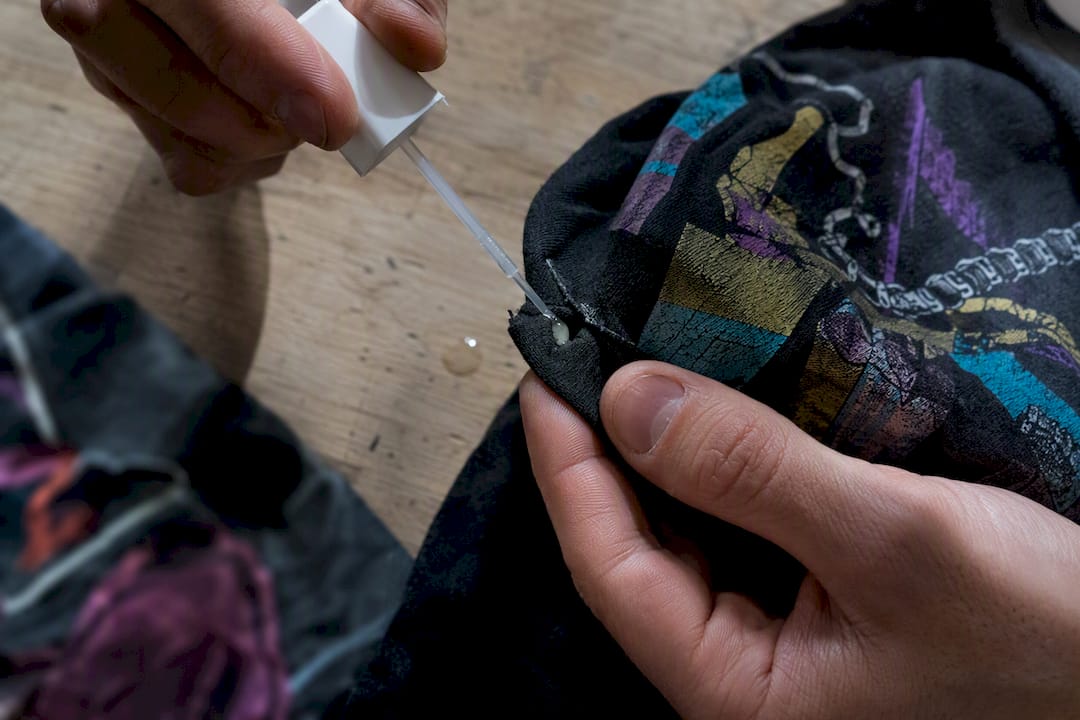
Pro Tip: Rotate your pieces. Wearing the same three shirts on repeat accelerates fading no matter how careful your wash routine is. Spot-clean minor spills instead of running a full wash, and reserve your rarest pieces for occasions instead of daily rotation.
Small habits like inside-out washing and air-drying have an outsized effect on how long a print stays crisp, often mattering more than what you paid for the shirt in the first place.
How Should You Organize and Display a Growing Collection?
Not every tee needs to hang behind glass. Decide early which pieces are daily-wear favorites and which deserve protected display, then build your system around that split.
- Display pieces: shadowboxes or low-UV frame cases work well for rare or single-run designs you want on a wall, not in rotation.
- Wearable pieces: fold along the shoulder seams and store with acid-free tissue between layers to prevent creasing at the print.
- Everyday stack: breathable cotton garment bags keep dust off shirts you wear regularly without trapping moisture.
Cataloging doesn’t need to be complicated. A basic spreadsheet works for most collectors:
- Title and franchise or theme
- Release date or drop name
- Size and fit notes
- Condition (new, lightly worn, display-only)
- A quick photo for reference
This kind of documentation is standard practice among adult collectors, who treat provenance and condition tracking as part of the hobby rather than an afterthought. Organizing by season or theme, say all your fantasy pieces together, makes the collection easier to browse and easier to build with intention.
Where Should You Buy Collectible Fandom Tees?
Buying direct from the brand behind a design should top your list. You get accurate edition details, first access to limited colorways, and no markup from a reseller guessing at scarcity. Indie limited runs come next, followed by curated shops that aggregate multiple brands but rarely control print quality or sizing consistency.
Before buying anywhere, check the product page for four things:
- Fabric composition (tri-blend versus straight cotton)
- Print method and any edition or numbering notes
- A real size chart, not just S through XL guesses
- Return policy, since fit issues are common across fandom apparel brands
Simpletee fits this buying hierarchy well. Every design draws on original fandom art rather than licensed stock graphics, built on tri-blend fabric, and priced at $24.99, which keeps a growing collection affordable without pushing you toward the cheapest, lowest-quality reprints on the market. If you want to see collecting culture and display ideas from outside the fandom-apparel world, Vinylcollectibles is worth a browse for how other collector communities handle documentation and trade.
- Join a brand’s mailing list before a drop, not after.
- Know your size in that brand’s specific cut beforehand.
- Have payment info saved for launch day, since limited runs can sell out in hours.
What I’ve Learned Curating a Collection Around Subtlety
I favor subtle signals and tri-blend fabric for one practical reason: those are the shirts people actually keep wearing. A loud logo tee gets worn twice and shelved. A design with a hidden motif or a muted color palette tied to a specific scene gets worn for years, because it works as a shirt first and a fan signal second.
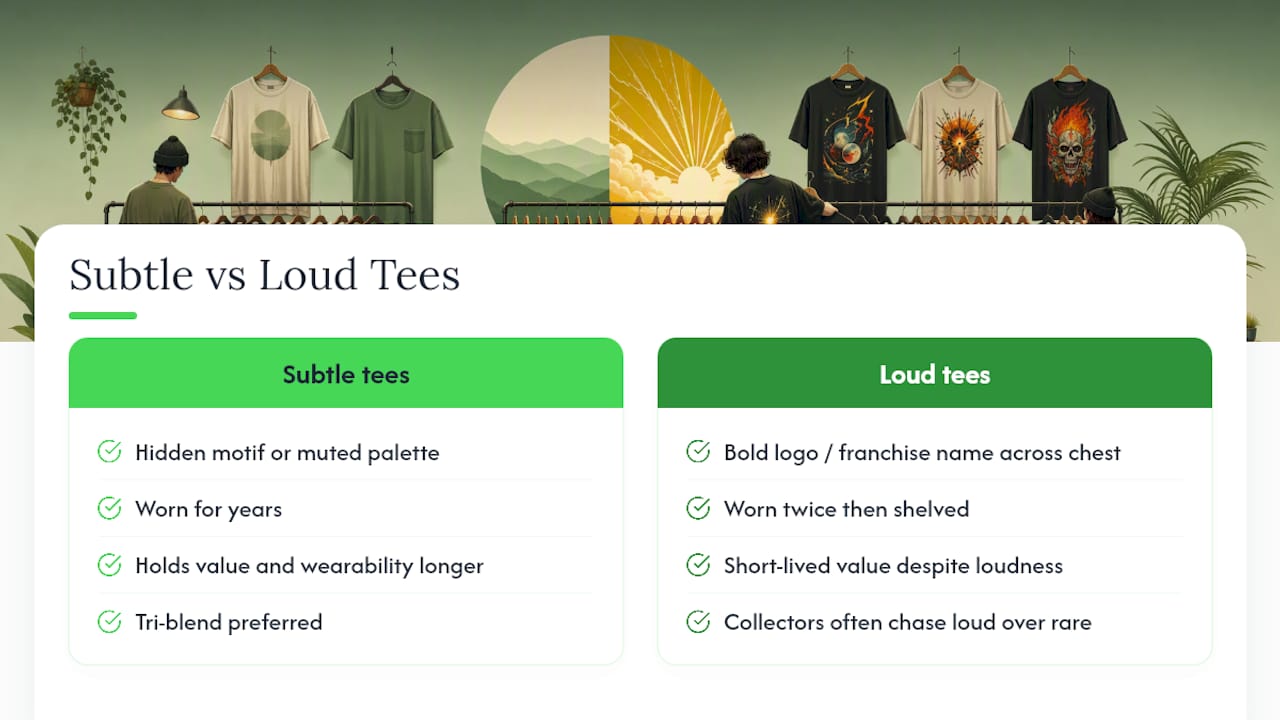
The mistake I see most often is collectors chasing loud over rare. A numbered run with quiet design will hold its value and its wearability longer than a shirt that just shouts a franchise name across the chest.
— Jonathan
Ready to Start Your Collection?
Simpletee is built around exactly the criteria this guide walks through: original fandom art instead of generic licensed graphics, tri-blend fabric that holds up to real rotation, and a flat $24.99 price that lets you build a collection without rationing every purchase.
A few pieces show the range well. Rainbow Falcon leans into a muted, artistic palette that rewards a second look rather than shouting its reference. Rebel takes a cleaner, more graphic approach for fans who want their fandom visible but not literal. The Squad Goals Black Metal Edition pushes into darker, edition-specific artwork built for collectors who want something a little more limited on the rack.
Browse the full lineup at Simpletee’s store, and if you want first access to limited runs before they sell out, join the mailing list ahead of the next drop. Have your size and payment method ready. Launch-day pieces move fast, and restocks rarely bring back the same edition details.
Sources
- The effect of fan-themed apparel products’ signal explicitness on fans’ perceptions: the moderating effect of fanship | Fashion and Textiles
- Dissertation on fandom socialization and merchandise purchase behavior (University of Nebraska–Lincoln digital commons)
- How to Maintain Custom T-Shirts and Apparel: A Complete Care Guide - Custom Ink Blog
- Mashable coverage of subtle fandom merch trends