

For most t-shirts, folding is the right call. Knit jersey fabric, which is what the vast majority of tees are made from, stretches under its own weight when hung, and that distortion tends to be permanent. The two main exceptions: heavyweight cotton shirts (roughly 6 oz or more) can tolerate short-term hanging without much damage, and any tee you plan to wear within a day or two is fine on a hanger. Everything else belongs in a drawer, folded upright using the KonMari file-fold method.
Key takeaways
| Point | Details |
|---|---|
| Fold is the default | Most tees are knit jersey and stretch permanently when hung; fold them upright. |
| Fabric-first rule | Hang structured, woven, or heavyweight items; fold knits, tri-blends, and embellished tees. |
| 24-hour hanger test | Hang a suspect tee for 24 hours; if shoulders peak or hem drops, it’s a folder. |
| File-fold for space | Upright file-folding fits up to 30% more shirts in the same drawer versus flat stacking. |
| Simpletee tri-blends | File-fold for storage; short-term hanging on a wide hanger is fine for daily-wear pieces. |
Table of Contents
- Should you fold or hang t-shirts? The fabric-first rule explained
- Why folding is the safer default for most t-shirts
- How to hang a t-shirt without stretching or marking it
- Best folding methods for t-shirts
- How to organize drawers, shelves, and limited closets
- Quick checks and maintenance routines to keep tees looking right
- Common storage mistakes that damage t-shirts
- Research snapshot: space savings and hanger types
- The one weekly habit that actually keeps tees in shape
- Tees built to hold up to storage and regular wear
- Sources
Should you fold or hang t-shirts? The fabric-first rule explained
The answer starts with how the fabric is made, not how the shirt looks. Most t-shirts are knitted jersey, meaning the loops of yarn are interlocked rather than woven. That structure is what gives a tee its stretch and softness — and it’s exactly what makes hanging risky. Gravity pulls the fabric down continuously, and over days or weeks, the shoulders distort, the neck widens, and the hem drops unevenly.
The fabric-first storage rule is simple: hang tailored, structured, and crease-prone items; fold stretchy, heavy, embellished, or knit pieces. Here’s how that maps to common tee types:
- Lightweight fine-gauge knit tees (most printed graphic tees, fashion tees): fold always
- Tri-blend tees (cotton/polyester/rayon mix): fold; the rayon content makes them especially prone to hang distortion
- Heavyweight cotton jersey (6+ oz, structured shoulder seams): can hang short-term on a wide hanger
- Embellished or screen-printed tees: fold flat to protect the print surface
- Woven dress shirts that look like tees: hang; woven fabric doesn’t stretch the same way
- Oversized or drop-shoulder tees: fold; the extended shoulder seam amplifies distortion on a hanger
Construction matters too. A shirt with a reinforced set-in sleeve and thick shoulder seam handles hanging better than one with a soft, raglan-style seam. When you’re not sure, run the 24-hour test.
Pro Tip: Hang the suspect tee on a proper wide hanger for 24 hours, then lay it flat. If the shoulders show peaks, the hem has dropped, or the neck looks wider than before, that shirt is a folder — no exceptions.
Why folding is the safer default for most t-shirts
Picture where a wire or thin plastic hanger actually contacts the shirt: two narrow points at the shoulder tips and a curved ridge pressing into the neck. On a woven blazer, that pressure is distributed across a structured lining and interfacing. On a jersey tee, there’s nothing between the hanger and the knit loops. The fabric deforms at those contact points, and because knit stretch is largely permanent once set, the damage doesn’t wash out.

Folding removes gravity from the equation entirely. A shirt lying flat or standing upright in a drawer carries its own weight evenly across the whole panel, so no single area takes repeated stress. You also get a practical bonus: file-folding can increase drawer capacity by up to 30% compared with conventional stacking, which means fewer shirts competing for rail space.
There’s a visibility argument too. A drawer full of file-folded tees lets you see every shirt at once, the same way you’d flip through record sleeves. Pull one out and the rest stay put. Stack them flat and you’re excavating the pile every time you want the shirt at the bottom.
How to hang a t-shirt without stretching or marking it
Hanging isn’t always wrong. There are three situations where it makes sense: you’re wearing the shirt within 24 hours, the tee is a heavyweight cotton style that tolerates the load, or you’re in a humid environment where folded shirts in a drawer won’t dry properly after washing.
When you do hang, the hanger choice is the single biggest variable. Wire hangers and thin plastic ones concentrate pressure on two small points at the shoulder tips. Wide, padded, or contoured hangers spread that load across the full shoulder width, which is the difference between a shirt that holds its shape and one that develops permanent bumps.
Follow this checklist when hanging tees:
- Use a wide or contoured hanger with a shoulder width that matches the shirt’s shoulder seam, not narrower
- Avoid wire hangers entirely for knit tees; the narrow gauge cuts into the fabric over time
- Button the top button (if any) before hanging to keep the neckline centered
- Leave at least 1–2 inches of rod space between each hung shirt so fabric isn’t compressed against neighboring garments
- Don’t hang damp tees on a wooden hanger; moisture warps the wood and transfers to the fabric
- For oversized or heavy tees, fold over the hanger bar at the waist rather than hanging by the shoulders if you must store them this way short-term
Even with the right hanger, lightweight knits will sag over time. Hanging is a short-term solution, not a long-term storage strategy for most tees.
Best folding methods for t-shirts
Three methods cover almost every situation. Which one you use depends on where the shirt is going: a drawer, a shelf, or a travel bag.
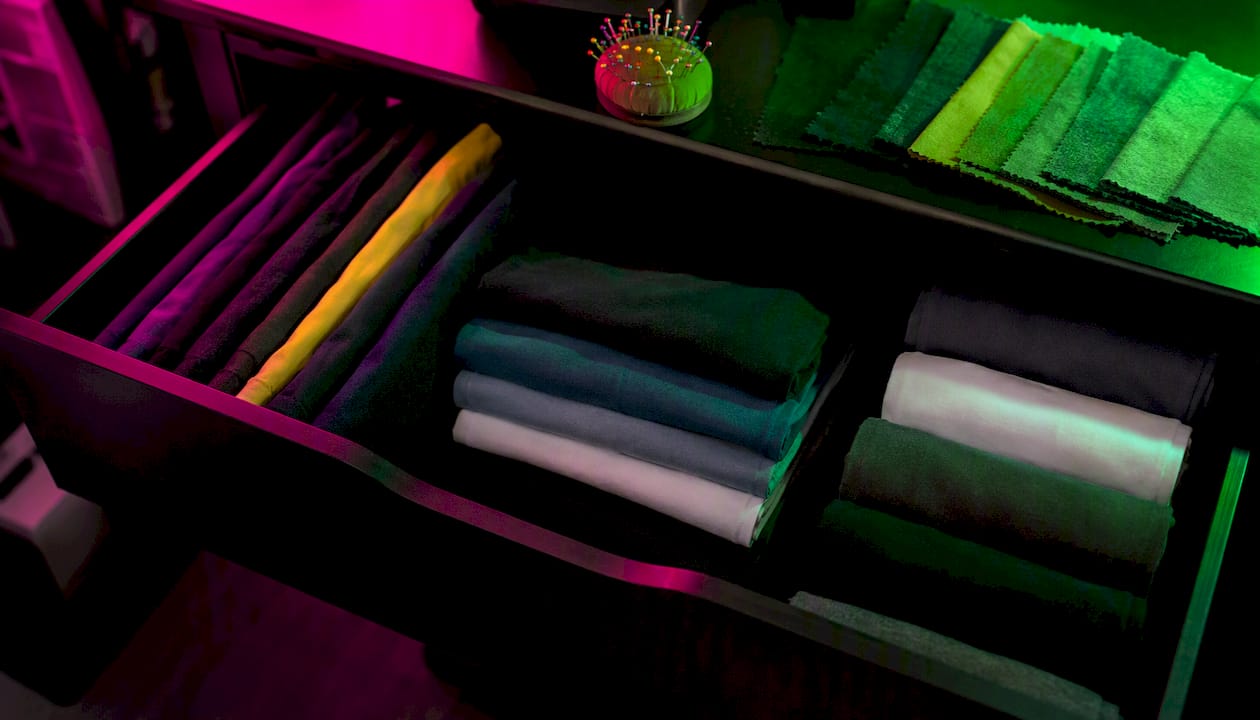
File fold (KonMari method)
This is the best default for drawer storage. Shirts stand upright so you see all of them at once, and pulling one out doesn’t collapse the rest.
- Lay the shirt face-down on a flat surface.
- Fold one side (about one-third of the width) toward the center, then fold the sleeve back so it doesn’t extend past the edge.
- Repeat on the other side. You now have a long rectangle.
- Fold the bottom third up, then fold again so the shirt is roughly the height of your drawer.
- Stand it upright. It should hold its shape without flopping over.
Classic flat fold
Fast, works for shelf stacks, and fine when you’re folding for a short trip or a shelf where visibility doesn’t matter.
- Lay the shirt face-up.
- Fold one side to the center, sleeve included.
- Fold the other side over it.
- Fold the bottom half up to meet the collar.
The classic flat fold is quick but prone to stack instability — the top shirts shift and the pile collapses when you pull from the middle. Use it for shelves, not deep drawers.
Compact roll
Best for travel bags and soft fabrics where a sharp crease would show.
- Lay the shirt flat and fold the bottom hem up about two inches to create a cuff.
- Fold both sides to the center.
- Roll tightly from the collar down toward the cuffed hem.
- Tuck the roll into the cuff to lock it.
Rolling distributes tension across the fabric rather than concentrating it at fold lines, which lowers visible crease risk. It’s not ideal for long-term drawer storage because the rolls shift and unravel, but for a weekend bag it’s hard to beat.
Pro Tip: Whatever method you use, always smooth the shirt flat before folding — one pass with your palm from collar to hem. Folding over existing wrinkles sets them permanently. This single step prevents most of the crease complaints people blame on the folding method itself.
How to organize drawers, shelves, and limited closets
Storage layout matters as much as folding technique. A perfectly file-folded shirt crammed into an overstuffed drawer will still wrinkle.
Leave enough room that you can lift a shirt out without dragging the neighbors with it. Compression at the bottom of a packed drawer creates the same kind of permanent crease that repeated folding in the same spot does.
Here’s how to set up common storage types:
- Deep dresser drawers: file-fold upright, shirts standing like files in a cabinet; group by color or sleeve length so you can grab without searching
- Shallow drawers: classic flat fold in two layers maximum; more than two layers and the bottom shirts wrinkle under the weight
- Open shelves: flat fold in small stacks of 5–6 shirts; use a shelf divider to stop the stacks from leaning
- Small closets with limited rail space: reserve the rail for structured items (jackets, woven shirts, dress pants) and move all tees to a drawer or a shelf basket
- Seasonal rotation: store off-season tees in a lidded bin or vacuum bag; file-fold them first so you can see what’s inside without unpacking everything
For home organization systems that combine rail and drawer space, a good rule of thumb is to assign the rail to anything that wrinkles when folded and the drawer to anything that stretches when hung. That single sorting decision handles most wardrobes without overthinking it.
| Storage type | Best folding method | Capacity note |
|---|---|---|
| Deep dresser drawer | File fold (upright) | Up to 30% more shirts vs flat stacking |
| Shallow drawer | Classic flat fold | Max 2 layers to avoid compression |
| Open shelf | Classic flat fold | Stack max 5–6 shirts; use dividers |
| Travel bag | Compact roll | Reduces crease lines; rolls may shift |
| Rail (short-term) | Hang on wide hanger | 1–2 inches rod space per shirt |
Quick checks and maintenance routines to keep tees looking right
A five-minute weekly habit prevents most long-term fabric damage. You don’t need to refold everything, just catch the problems before they set.
- Check for shoulder peaks or hem drop on any hung tees; if you see either, move the shirt to a drawer
- Smooth and refold any shirt that’s been sitting crumpled at the bottom of a stack
- Rotate your drawer: move shirts from the back to the front so you’re not always wearing the same three tees while the rest sit compressed
- Steam, don’t iron a tee with a stubborn crease; a handheld steamer relaxes the knit without the direct pressure that can cause shine on printed areas
- Air shirts out after wearing before refolding; folding a shirt that’s still warm from your body traps moisture and sets wrinkles faster
Before storing tees for a season, run through this short checklist:
- Wash and fully dry every shirt before storage (body oils break down fabric over time)
- Check for pilling and use a fabric shaver on affected areas before folding
- File-fold and store in a breathable bin or drawer, not a sealed plastic bag (unless vacuum-packing for space)
- Label or photograph the bin contents so you’re not unpacking everything in spring to find one shirt
Pro Tip: A handheld steamer is the fastest fix for a tee that’s been folded in the same spot for months. Hold it 2–3 inches from the fabric, let the steam penetrate for a few seconds, then gently reshape with your hands. Most crease lines disappear without washing.
Common storage mistakes that damage t-shirts
Most tee damage is preventable and comes down to a short list of repeated errors.
- Wire hangers: the narrow gauge concentrates all the shirt’s weight on two small points; replace them with wide or padded hangers for anything you hang regularly
- Overstuffed drawers: compression at the bottom creates permanent crease lines and shine on printed areas; remove 20% of the shirts or move them to a second drawer
- Folding in the same crease every time: the fabric weakens along that line; vary the fold point slightly each wash cycle
- Hanging damp tees: moisture plus gravity accelerates stretch; always dry fully before hanging or folding
- Stacking too many shirts: more than 6–8 flat-folded shirts in a stack and the bottom ones wrinkle under the weight; split into two stacks
For stretched necklines and shoulder bumps already on a shirt, a short-term fix is to wet the affected area, reshape it by hand, and let it dry flat. For shoulder bumps specifically, try laying the shirt face-down on a towel and pressing the bump flat while damp. It won’t fully reverse severe distortion, but it helps with mild cases. The long-term fix is simply to stop hanging that shirt.
Smoothing before folding and avoiding repeated deep creases in the same spot are the two steps that prevent most of the damage people attribute to washing or fabric quality.
Research snapshot: space savings and hanger types
The numbers behind the folding-vs-hanging debate are straightforward. File-folding increases drawer capacity by up to 30% compared with conventional stacking, and each hung shirt typically occupies 1–2 inches of rod space. On a standard closet rod, hanging many shirts can lead to them pressing against each other, which may transfer lint or cause wrinkles to neighboring garments.
For hanger selection, the research is consistent: wide, padded, or contoured hangers protect shape; wire and thin plastic fail because they can’t distribute the load across the shoulder seam. Padded hangers add a layer of cushioning that prevents the ridge marks thin hangers leave on lightweight knits. Contoured hangers match the natural slope of the shoulder, which keeps the shirt’s silhouette intact.
Stat to know: File-folding can fit up to 30% more shirts in the same drawer space compared with flat stacking — meaning a drawer that holds 10 flat-folded tees can hold roughly 13 file-folded ones.
Pro Tip: If your rail space is limited, prioritize it for structured items that genuinely need hanging (blazers, woven shirts, dress pants) and move every knit tee to a drawer. You’ll protect the tees and free up rail space for the garments that actually benefit from it.
| Hanger type | Shoulder protection | Best for |
|---|---|---|
| Wide plastic or wood | Good | Heavyweight cotton tees, casual shirts |
| Padded fabric | Excellent | Lightweight knits, delicate fabrics |
| Contoured wood | Excellent | Structured tees, woven shirts |
| Wire | Poor | Nothing — avoid for all tees |
| Thin plastic (tubular) | Poor | Avoid for knit tees |
The one weekly habit that actually keeps tees in shape
The conventional advice on this topic tends to split into two camps: “always fold” or “hang everything for a tidy closet.” Both miss the point. A tidy-looking wardrobe isn’t automatically fabric-safe, as the fabric-safe storage guide makes clear, and “always fold” ignores the legitimate cases where hanging is the right call.
The approach that actually works is simpler than either camp suggests: keep daily-wear tees on wide hangers if you’re reaching for them within a day or two, and file-fold everything else upright in a drawer. That’s the whole system. It takes about three minutes to set up and maybe 30 seconds per shirt to maintain.
The part people skip is the rotation. A shirt that sits in the same folded position for three months will hold that crease. The heavyweight tee options that tolerate hanging are the exception, not the template for the whole wardrobe.
Tees built to hold up to storage and regular wear
Simpletee’s graphic tees are tri-blend construction, which means cotton, polyester, and rayon woven together for a softer hand and better print adhesion than a standard single-jersey tee. That blend also means they follow the folding rule above: file-fold them for long-term storage, and if you hang one short-term, use a wide or padded hanger. The polyester content gives them better shape retention than a pure cotton tee, but the rayon makes them sensitive to hang distortion over time.

If you want a tee that holds its print and its shape through regular washing and refolding, the Stone and Dagger tri-blend and the Secret Agent tee are good starting points. Both are available in multiple colors and sizes. Browse the full collection at Simpletee’s graphic tee store — fandom designs for Lord of the Rings, Star Wars, TMNT, and more, each at $24.99.
Sources
- Hanging vs folding clothes: fabric-safe storage guide — Fabric Care Guide
- Storing t‑shirts a new way: file them away — Clever Girl Organizing
- How to fold shirts for drawers: pro organization tips — EcoCraftyLiving
- Should you hang or fold t‑shirts and why? — Lost Monarch