

Side-seamed t-shirts are known for retail-quality fit and accurate print placement, while tubular t-shirts are favored for wrap-around prints, oversized silhouettes, and generally lower cost per unit. That’s the whole decision in one sentence.
Tubular knits can experience a twisting defect called torquing that may shift a print off-center after some washes, whereas side-seamed construction involves additional labor and fabric waste due to extra cutting and sewing. Printful and Bella+Canvas both frame the choice around exactly these trade-offs, and it’s why Simpletee builds its graphic tees on side-seamed tri-blend blanks rather than tubular ones.
- Retail fit, tailored shape, stable print alignment → side-seamed
- Wrap prints, all-over designs, high-volume promo runs → tubular
- Watch for: torquing risk on tubular, higher unit cost on side-seamed
Key Takeaways
Side-seamed construction delivers a tailored fit and stable print placement, while tubular construction cuts cost and enables uninterrupted wrap-around designs.
| Point | Details |
|---|---|
| Choose by end use | Side-seamed for retail fit and print accuracy; tubular for wraps and budget runs. |
| Watch for torquing | Tubular knits can twist after washing, shifting print alignment over time. |
| Grading favors side-seamed | Precise size grading across a range is easier with panel-based construction. |
| Ask suppliers for wash data | Request sample wash tests and spirality reports before large tubular orders. |
| Simpletee uses side-seamed | Simpletee’s tri-blend tees are side-seamed for consistent retail fit and print stability. |
Table of Contents
- Side Seam vs Tubular Construction: How Each Shirt Is Made
- How Does Fit Differ Between Tubular and Side-Seamed Shirts?
- What Causes Torquing and Does It Affect Print Placement?
- Which Construction Is Better for Printing and Decoration?
- How Do You Choose Between Side-Seamed and Tubular Blanks?
- How Simpletee Approaches Seam Construction for Its Shirts
- What conventional advice on this topic gets wrong
- Get Retail-Quality Fit Without Guessing on Blanks
- Sources
Side Seam vs Tubular Construction: How Each Shirt Is Made
The two construction methods start from completely different fabric processes, and that origin point explains almost every downstream difference in fit and cost.
- Tubular knitting produces fabric as a continuous circular loop on a knitting machine, essentially a tube with no side seams. The tube gets cut to length, and sleeves and a collar are attached, but the torso itself is one uninterrupted cylinder of fabric.
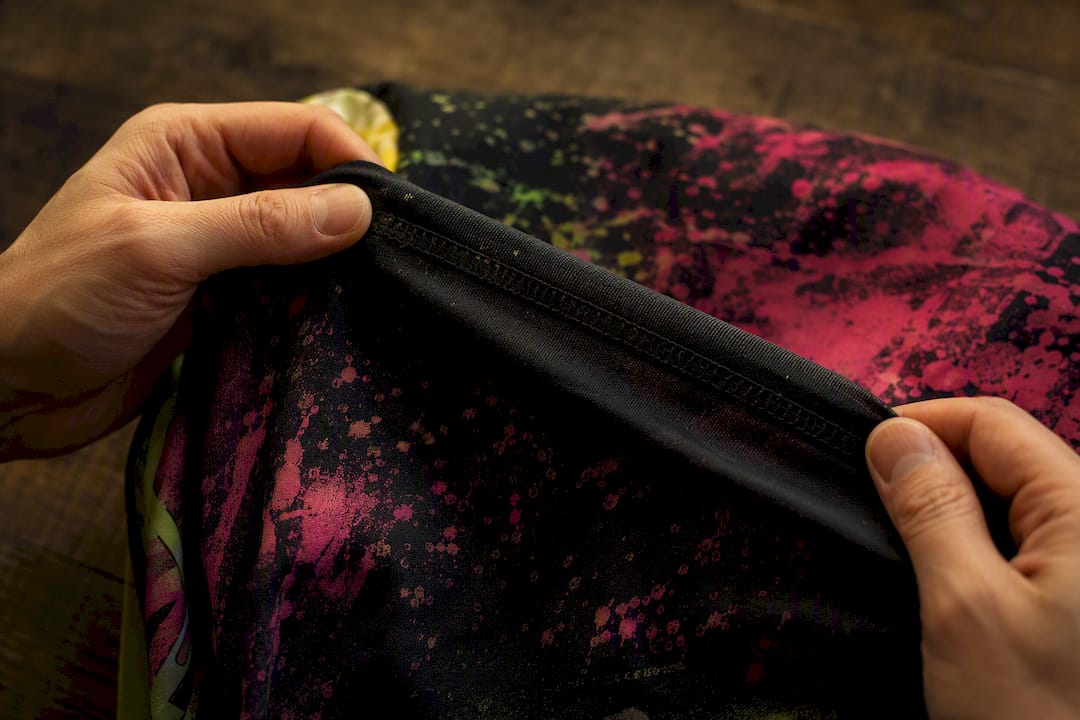
- Side-seamed construction starts with open-width fabric, which is cut into separate front and back panels. Those panels are then sewn together along the sides, creating two distinct seam lines that run from armpit to hem.
- The labor difference is significant. Tubular skips a full sewing operation and produces almost no cutting waste, since the fabric arrives pre-shaped. Side-seamed requires precise panel cutting, matching, and stitching, according to Cotton Monk’s manufacturing guide.
That labor gap is also a flexibility gap. A factory running tubular knits can shift between styles quickly because there’s less pattern-matching involved, but it’s locked into whatever shape the tube naturally produces. A side-seamed line takes longer to set up per batch, but it opens the door to tailored cuts, shaped waists, and size grading that a tube simply can’t replicate.
How Does Fit Differ Between Tubular and Side-Seamed Shirts?
Fit is where shoppers and brand owners feel the difference most directly, even if they’ve never thought about seam construction before.
- Side-seamed shirts allow for tapering at the waist, shaped shoulders, and a silhouette that follows the body rather than hanging straight down. That tailoring lowers return rates for brands selling fitted styles, since the shirt looks closer to how it’s photographed on a model.
- Tubular shirts drape straight and boxy by nature, which is exactly the look a lot of streetwear and vintage-inspired brands want. There’s no tapering built into the tube, so the same silhouette repeats from small to extra-large with minimal variation.
- Grading across sizes is more precise with side-seamed construction, since pattern pieces can be adjusted individually per size. Tubular grading is constrained by the diameter options a knitting machine offers, which limits how finely a brand can dial in fit between sizes.
If you’ve ever noticed that a small and a large from the same tubular shirt line look like the exact same shape just scaled up, that’s the tube talking.
What Causes Torquing and Does It Affect Print Placement?
Torquing, also called spirality, happens when the knit structure inside a tubular fabric twists after washing and drying, pulling the side of the shirt diagonally instead of straight up and down. Circular knitting machines lay yarn in a slight spiral pattern to begin with, and without a seam to anchor the fabric, that spiral tendency has nowhere to go but into the finished garment.
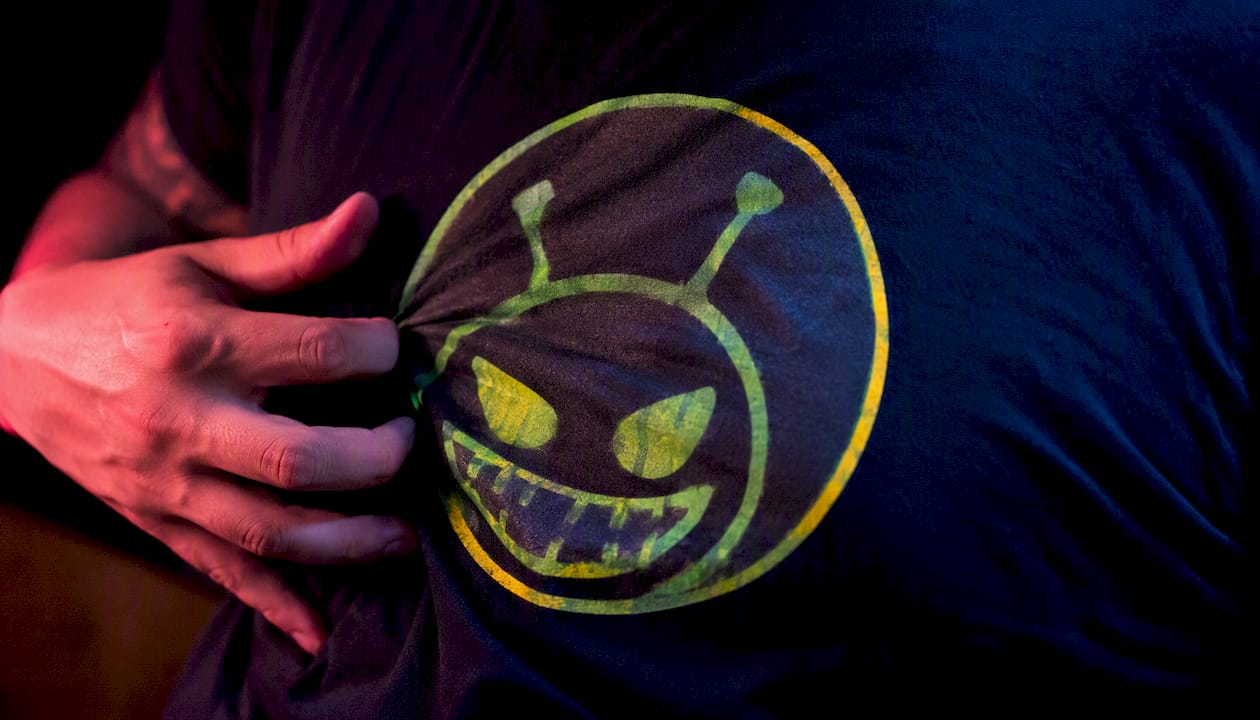
The practical consequence is print drift. A chest logo centered perfectly at the factory can end up rotated a few degrees off-axis after repeated washing, which is a bigger problem for brands than it sounds, since customers notice a crooked logo faster than almost any other quality issue.
Side seams act as physical anchors that resist this twist, which is one reason Bella+Canvas points to side-seamed construction as more stable for placement over a garment’s wash life. Finishing method matters too. Open-width fabric run through a stenter machine gets better width control than tubular fabric run through a compactor, which reduces spirality risk even before the seams come into play, according to Fersan Tekstil.
Pro Tip: Requesting a wash test report before ordering tubular shirts is important, as twisting can develop after multiple washes, which impacts customer satisfaction.
Which Construction Is Better for Printing and Decoration?
Print placement accuracy comes down to whether the shirt gives the printer a fixed reference point. Side seams do exactly that.
- Side seams work as a built-in registration guide. Printers and DTG operators can square a design off the seam line, which cuts down on crooked or off-center prints across a production run.
- Tubular shines when the print needs to wrap. All-over prints, sublimation designs, and graphics that continue around the body without interruption need an unbroken surface, and a tube provides exactly that. A side seam would literally cut through a wraparound design.
- Ink behavior varies by seam proximity. Screen printing near a side seam can create slight ink pooling in the seam trench, so designs meant for side-seamed shirts usually sit centered on the chest or back, away from the seam line. DTG and DTF are more forgiving here since they lay down thinner ink layers.
- Sublimation almost always favors tubular because the process works best on a continuous, seamless surface where dye migrates evenly across the fabric.
| Factor | Side-Seamed | Tubular |
|---|---|---|
| Fit profile | Tailored, contoured | Straight, boxy |
| Printability | Precise placement, seam as guide | Best for wraps and all-over designs |
| Production cost | Higher labor and cutting waste | Lower, less cutting waste |
| Wash stability | More resistant to twisting | Higher torquing risk |
| Best use case | Retail drops, fitted lines | Large promo runs, oversized streetwear |
How Do You Choose Between Side-Seamed and Tubular Blanks?
Start with four questions before you ever talk to a supplier, because the answers point you toward one construction almost automatically.
- What’s your budget per unit? Tubular typically runs cheaper because it skips a sewing step and wastes less fabric, per Cotton Monk. If margins are tight on a large order, that savings adds up fast.
- What fit are you going for? Fitted, tailored, retail-shelf-ready shirts point to side-seamed. Relaxed, boxy, streetwear-adjacent shirts point to tubular.
- What’s the print design? A centered chest logo works fine on either construction. A wraparound graphic or all-over print needs tubular’s unbroken canvas.
- What’s the order volume and wash life expectation? A one-off concert merch run that customers wear a handful of times can tolerate tubular’s torquing risk. A year-round retail line that needs to hold its shape after 30 washes should lean side-seamed.
For scenarios: a direct-to-consumer apparel drop selling fitted tees should default to side-seamed. A one-time concert or event merch table selling in bulk can save money going tubular. Women’s fitted lines almost always perform better side-seamed, since the tailoring is part of the value proposition.
Pro Tip: When you brief a supplier, ask three specific things: a sample wash test, spirality data on their tubular knits, and written confirmation of which construction you’re actually getting. Some sourcing sheets use the terms loosely, and that ambiguity costs money later.
How Simpletee Approaches Seam Construction for Its Shirts
Simpletee builds its entire catalog, from Stone and Dagger to Secret Agent, on tri-blend blanks priced at $24.99. Fandom shoppers buying a Lord of the Rings or Star Wars design expect the shirt to hold its shape and keep the print squared up after repeated wear, not just look sharp in a product photo.
That’s the reasoning behind sticking with side-seamed construction across the lineup. A tailored fit and stable print placement matter more to a collector wearing a shirt weekly than the small cost savings tubular would offer.
A graphic tee only works as self-expression if the graphic still looks right six months and thirty washes later. Fit and print stability aren’t cosmetic details, they’re the whole product.
- Tri-blend fabric for a softer hand and better drape
- Side-seamed panels for consistent sizing across the catalog
- Print placement centered to avoid seam interference during decoration
What conventional advice on this topic gets wrong
Most guides treat tubular as the “budget” or “lesser” option and side-seamed as the automatic upgrade. That framing misses the point entirely. The right construction depends on what the shirt has to do, not which one costs more to make.
A brand printing an all-over sublimated design has no business paying extra for side seams that would cut straight through the artwork. Tubular isn’t a downgrade there, it’s the only construction that makes the design possible. Conversely, a fitted women’s line built on tubular blanks is going to fight the fabric’s natural boxiness no matter how good the print looks.
Where the industry advice actually falls short is in glossing over torquing. Plenty of sourcing guides mention it in passing and move on, but for anyone selling apparel year-round, a shirt that twists after five washes is a returns problem waiting to happen. If you take one thing from this, prioritize wash-test data over price per unit when you’re evaluating a tubular supplier. Initial cost savings become less relevant if customers experience issues like crooked logos after some wear and washing.
— Jonathan
Get Retail-Quality Fit Without Guessing on Blanks
Sourcing your own blanks means testing suppliers, requesting wash reports, and hoping the tubular knit you ordered doesn’t twist after a season of wear. Simpletee skips that entire process for you. Every design ships on side-seamed tri-blend tees already vetted for fit and print stability, so what you see on the product page is what shows up on your doorstep.

That matters most if you’re a fan buying for yourself, not running a print shop. You don’t want to become a quality-control expert just to get a Middle-earth or TMNT design that fits right and stays square after washing. Browse the full Simpletee catalog or check out a design like Rebel Forever to see the side-seamed fit and print alignment for yourself, then order your size with confidence that it’ll look the same in month six as it did on day one.
Sources
- Side-Seamed vs. Tubular T-Shirts: What’s the Difference? — Printful
- Side-Seamed Tees VS. Tubular Tees – Beyond the Blank — BELLA+CANVAS
- Tubular vs Side Seam T-Shirts: What Sourcing Managers Need to Know — Cotton Monk
- Tubular or Open-Width? — Fersan Tekstil