

For most men, regular fit is the safest everyday choice. Pick slim when you want a sharper, more tailored silhouette and your chest and shoulders can carry it without pulling.
Quick verdict:
- Pick regular fit if you want comfort, versatility, and a shirt that works across body types without second-guessing the mirror.
- Pick slim fit if you’re lean or athletic and want the shirt to follow your shape rather than hang off it.
- Sizing tip: If you’re between sizes in a slim-fit tee, size up. If you’re between sizes in a regular fit, stay at your usual size.
Simpletee’s graphic tees use a tri-blend construction that drapes well and holds its shape, so the fit you choose actually looks the way it should after a few washes.
Table of Contents
- What does slim fit vs regular fit actually mean in measurements?
- Which fit flatters your body type?
- How fabric and construction change how each fit feels
- How to measure yourself and pick the right size (US inches)
- How to style slim and regular fit tees for different occasions
- Common fit mistakes and how to fix them fast
- Why Simpletee’s tri-blend graphic tees work for both fits
- Key Takeaways
- The fit conversation most men skip
- Simpletee’s tri-blend tees: fandom designs that actually fit right
- Sources and further reading
What does slim fit vs regular fit actually mean in measurements?
Fit describes the cut of a garment, not its labeled size. Two shirts tagged “Large” can fit completely differently depending on whether they’re cut slim or regular.
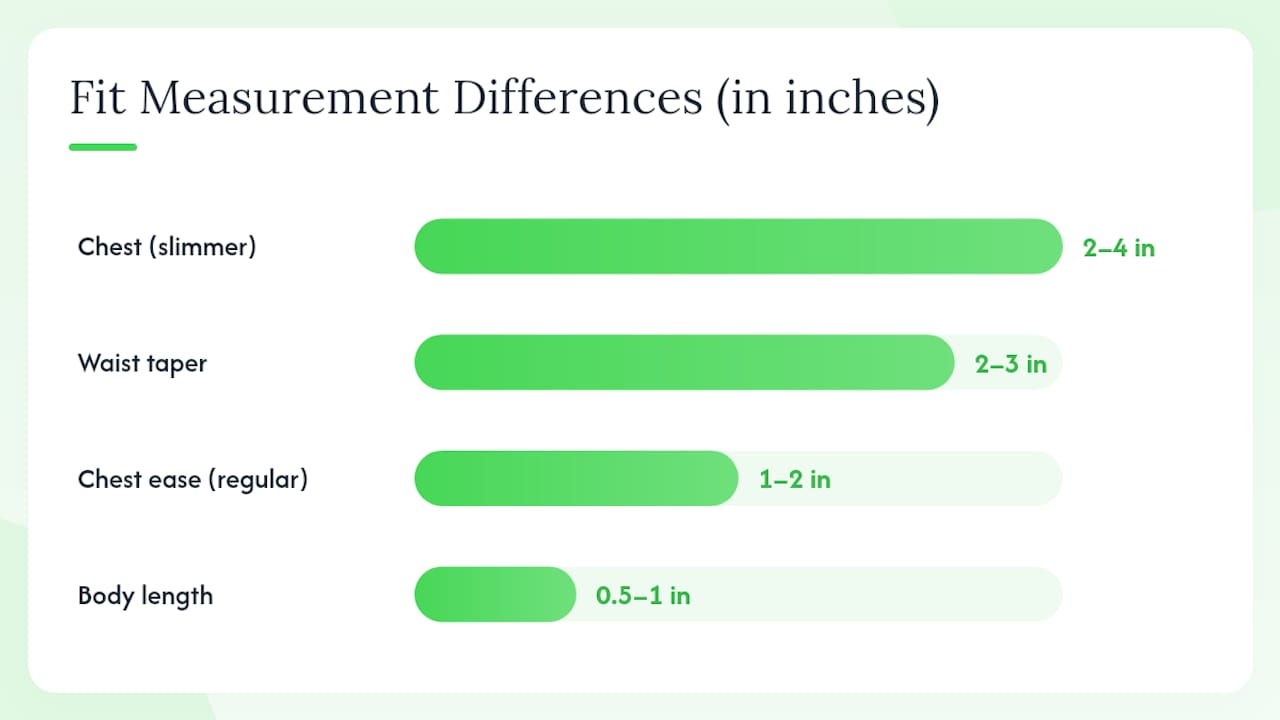
Slim fit is cut close to the body with a noticeable waist taper. Slim-fit patterns typically have a noticeable waist taper, higher armholes, and work best with some elastane for mobility. The chest circumference runs 2–4 inches smaller than a regular cut at the same labeled size, with sleeve widths 15–20% narrower and body length 0.5–1 inch shorter.
Regular fit is the classic middle ground. It sits away from the torso without billowing, offers about 1–2 inches of chest ease, and places the shoulder seam right at the shoulder bone for a balanced, unfussy silhouette.
| Measurement | Slim Fit | Regular Fit |
|---|---|---|
| Chest ease | Minimal (close to body) | 1–2 inches of ease |
| Waist taper | 2–3 inches narrower than chest | Little to no taper |
| Sleeve width | 15–20% narrower than regular | Standard width |
| Body length | 0.5–1 inch shorter | Standard length |
| Shoulder seam | Slightly inward | Sits at shoulder bone |
| Armhole | Higher, tighter | Lower, roomier |
Which fit flatters your body type?
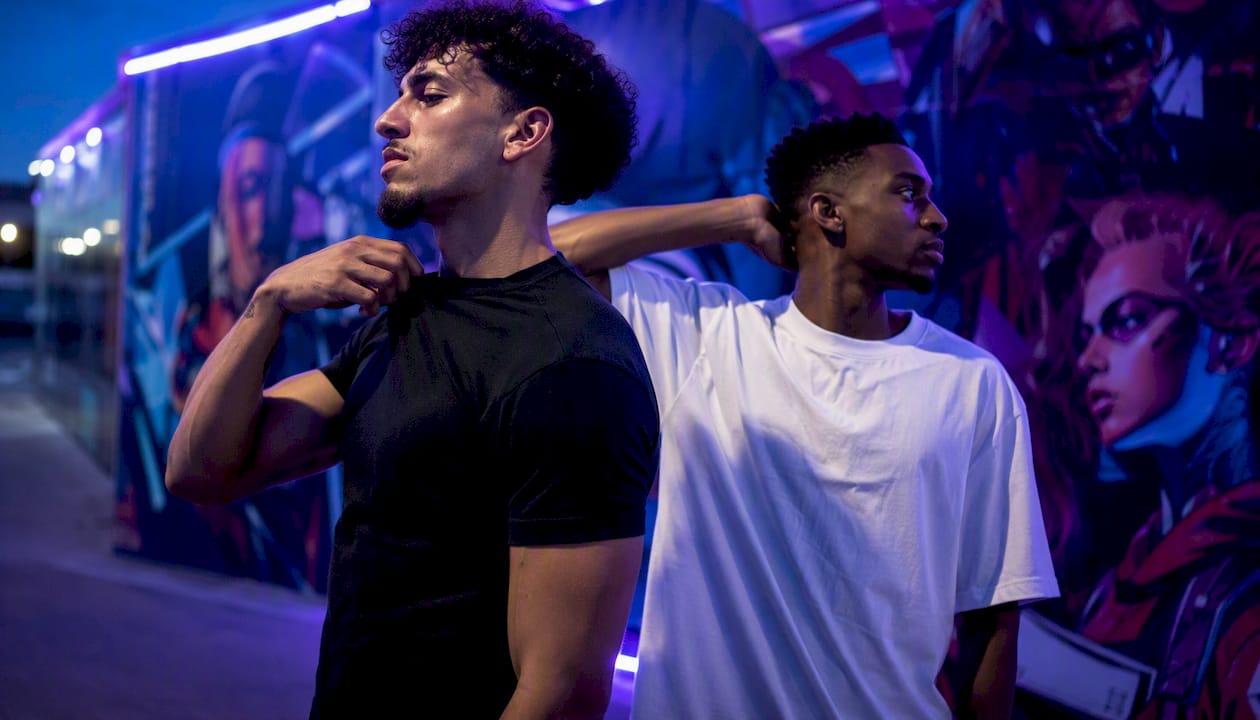
Slim fit flatters lean and athletic builds; regular fit is the safest, most versatile option across a wider range of body types. Here’s how that breaks down in practice.
Lean or ectomorph builds
Slim fit is your friend. The close cut adds visual structure and makes your frame look intentional rather than like the shirt is wearing you. Avoid boxy regular fits that add bulk in all the wrong places and make a narrow frame look smaller.
Athletic or mesomorph builds
You have options, but they come with a caveat. A standard slim fit may pull across your chest and shoulders even if the waist fits. Look for an “athletic slim” cut with extra room through the chest and a tapered waist. Regular fit works well too, especially if your shoulders are broad.
Average or medium builds
Regular fit is the default for a reason. It works. You get a clean silhouette without any fabric pulling or bunching. Slim fit can work if you’re on the leaner side of average, but size up if the chest feels snug.
Broad chest or soft midsection
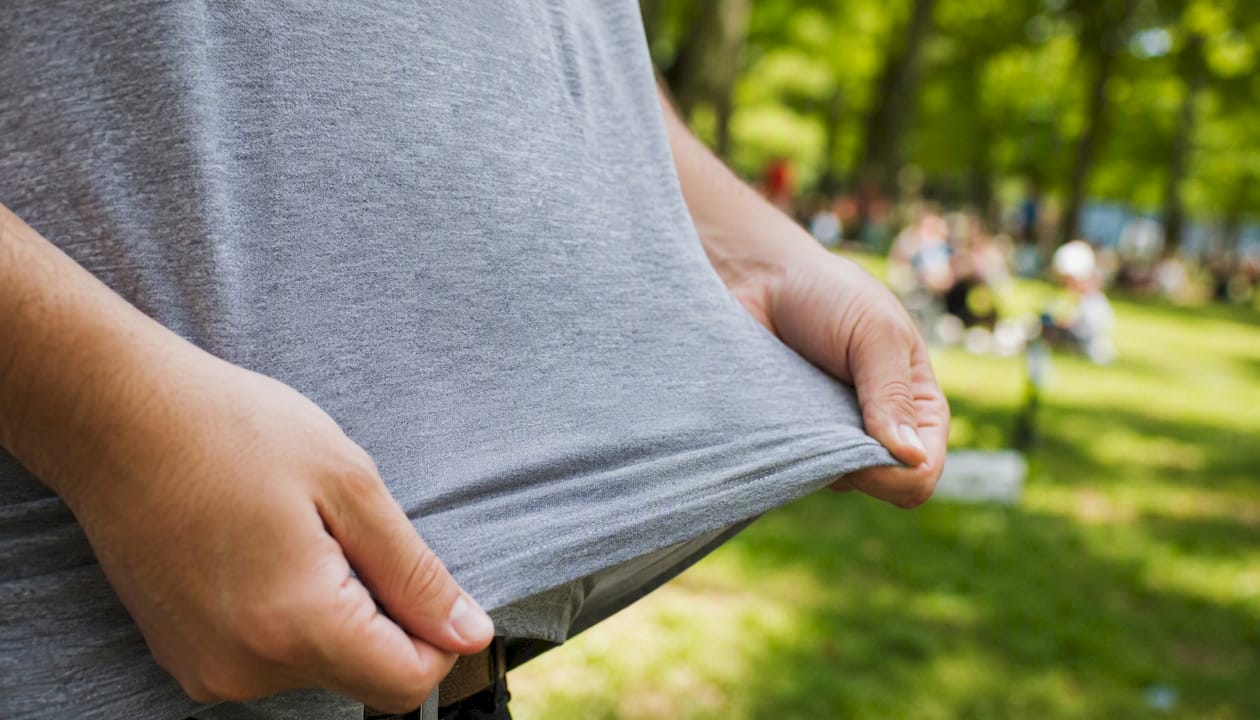
Regular fit, without question. Slim fit will cling at the midsection and create horizontal pull lines across the stomach, which draws attention to exactly the area most men want to minimize. A regular cut skims the body without hugging it.
Tall or large frames
Regular fit, and sometimes a size up from your usual. Slim cuts on tall men often end up too short in the body and too tight through the torso. Look for brands that offer tall sizing or longer body lengths.
How fabric and construction change how each fit feels
The cut is only half the story. What a shirt is made of determines whether that cut is comfortable or miserable to wear.
Slim fit without any stretch is a problem. When you raise your arms, reach across a table, or just sit down after a meal, a rigid slim-fit tee fights you the whole time. Adding 2–5% elastane or choosing an athletic slim pattern solves this by giving the fabric enough give to move with you and then spring back.
Cotton alone drapes heavily and can cling when damp. Polyester adds structure and moisture-wicking but can look cheap and feel plasticky against skin. Tri-blend fabrics, typically a mix of cotton, polyester, and rayon, hit the sweet spot: they drape softly, resist shrinkage better than 100% cotton, and hold printed graphics without cracking. For a slim-fit tee especially, that drape matters because the fabric sits closer to the body and any stiffness shows immediately.
Construction details also shift how a fit feels. Higher armholes in slim-fit patterns keep the sleeve from bunching when you move your arm forward, but they also mean less room for broader shoulders. Hem finish affects how the shirt sits when untucked: a straight hem reads more casual, a curved hem looks cleaner when worn out.
Pro Tip: Check the elastane percentage on the label before buying a slim-fit tee. Anything under 2% and you’ll feel restricted. Anything over 5% and the shirt may lose its shape after repeated washing.
How to measure yourself and pick the right size (US inches)
Fit type is about cut, not the number on the tag, so measuring yourself takes the guesswork out of ordering online.
How to take your measurements:
- Chest: Wrap a soft tape measure around the fullest part of your chest, just under your armpits. Keep it level and snug but not tight.
- Waist: Measure around your natural waist, roughly an inch above your navel.
- Shoulder width: Measure from the edge of one shoulder bone to the other across your upper back.
- Arm length: From the top of your shoulder to your wrist with your arm slightly bent.
Example: How the same “Large” label differs by cut
Quick sizing rules:
- In slim fit, if your chest measurement lands at the top of a size range, size up.
- In regular fit, your standard size usually works. Only size up if your shoulders are broader than average.
- If your chest and waist measurements point to different sizes, use your chest for the primary fit and check whether the waist will work.
How to style slim and regular fit tees for different occasions
The fit you choose shapes the whole outfit, not just the shirt.
Styling slim fit
Slim fit reads sharper, so it works harder in dressed-up casual situations. Layer it under an unstructured blazer for a smart-casual look that doesn’t need a collar. Slim fit is the right call when you’re layering under a blazer or want a tailored silhouette. Tuck it into chinos or slim trousers and the proportions stay clean. Pair it with slim or tapered pants, not wide-leg cuts, or the top half will look too tight against the bottom half.
Avoid wearing a slim tee untucked with baggy shorts. The contrast between a tight top and loose bottom looks unintentional. Also skip heavy layering with a slim tee as the base layer; it will bunch under anything with structure.
For streetwear proportions, a slim tee under an open overshirt or flannel works well. Authentic streetwear design relies on proportion balance, and a slim base layer gives you room to add volume on top without looking shapeless.
Styling regular fit
Regular fit is the workhorse. Untucked with jeans or shorts, it’s the most natural casual look there is. The extra ease makes it better for physical activity, outdoor wear, and anything where you’re moving around. Layer it under a zip hoodie or an open flannel without any bunching.
For everyday wear, regular fit offers the breathability and ease that slim fit can’t match. Keep the rest of the outfit proportional: regular-fit pants or straight-leg jeans work better than very slim cuts, which can make the shirt look oversized by comparison.
Common fit mistakes and how to fix them fast
Most fit problems have a fast fix that doesn’t require returning the shirt.
Red flags to watch for:
- Horizontal pull lines across the chest or stomach (shirt is too tight)
- Sleeve fabric bunching at the armpit when you move your arm forward (armhole too low or sleeve too wide)
- Hem riding above the waistband when you raise your arms (shirt is too short)
- Shoulder seam sitting down your upper arm (shirt is too wide)
- Fabric pooling at the sides when tucked (shirt is too wide through the torso)
Fast fixes:
- Pull lines across the chest: Size up or switch to an athletic slim cut with more chest room.
- Sleeve bunching: Try a slim-fit version of the same shirt; the higher armhole usually solves this.
- Hem too short: Size up in the body, or look for brands offering tall sizing.
- Shoulder seam off: This one is hard to fix without tailoring. It’s the most important measurement to get right at purchase.
- Too much fabric at the sides: A tailor can take in the side seams for $15–$25 at most local alterations shops. Worth it for a shirt you love.
When to return versus tailor: if the shoulders fit and the chest fits, tailoring the waist or hem is easy and cheap. If the shoulders are wrong, return it.
Why Simpletee’s tri-blend graphic tees work for both fits
Simpletee’s tees are built on a tri-blend construction, which is exactly the fabric type that performs well whether you’re wearing a slim or regular cut. The cotton-polyester-rayon mix drapes softly against the body, resists the heavy shrinkage that ruins a slim fit after a few washes, and holds graphic prints without cracking or fading. That last point matters more than most buyers realize: a bold fandom print on a stiff, shrinking cotton tee looks rough after six months. On a tri-blend, it stays sharp.
Simpletee’s graphic tees are priced at $24.99, which puts them well below what most specialty apparel brands charge for comparable tri-blend construction.
For sizing on Simpletee products, the general rules from this guide apply directly. If you’re lean or athletic and want the design to sit close to your chest, order your standard size. If you run broad through the shoulders or chest, or if you prefer a relaxed everyday fit, size up one. The Rebel tri-blend tee and the Natural Sprinter are good starting points to check the size chart against your chest measurement before ordering. The Stone and Dagger tee shows how a larger graphic design sits across the chest in a regular cut, which is useful if print placement matters to you.
Key Takeaways
Slim fit works best for lean and athletic builds; regular fit is the more versatile everyday choice for most men, and measuring your chest before ordering is the single most reliable way to get the right size.
| Point | Details |
|---|---|
| Regular fit suits most men | It offers 1–2 inches of chest ease and works across a wide range of body types. |
| Slim fit needs stretch | Look for 2–5% elastane; without it, mobility suffers in a close-cut tee. |
| Measure before you order | Chest circumference differs 2–4 inches between slim and regular at the same labeled size. |
| Size up in slim fit | If your chest lands at the top of a size range in slim, go up one size. |
| Simpletee tri-blend tees | At $24.99, they drape and hold prints well in both slim and regular cuts. |
The fit conversation most men skip
Most fit guides stop at body type. Lean guys get slim fit, everyone else gets regular, end of story. That framing misses something worth saying plainly: the fabric matters as much as the cut, and most men don’t check it.
A slim-fit tee in 100% cotton with no stretch is a shirt you’ll wear twice before it either shrinks into a crop top or you stop reaching for it because it fights you every time you move. The cut is right but the material makes it unlivable. Meanwhile, a tri-blend regular fit in the same labeled size will still look clean after a year of washing, drape the way it did on day one, and hold a graphic print without cracking at the fold lines.
The other thing worth saying: fit confidence is mostly about proportion, not tightness. Men often assume slim fit means “tight” and regular means “comfortable.” Neither is quite right. A well-cut regular fit on a broad-shouldered guy looks sharp. A slim fit on a lean guy who sized up because he was nervous about tightness just looks like a regular fit that doesn’t quite work. Get the measurements right, check the fabric blend, and the fit label almost takes care of itself.
Simpletee’s tri-blend tees: fandom designs that actually fit right
Most graphic tees sacrifice fit for print space. Simpletee does the opposite: the tri-blend construction keeps the fabric soft and stable, so the design sits flat and the shirt holds its shape whether you’re wearing it slim or relaxed.
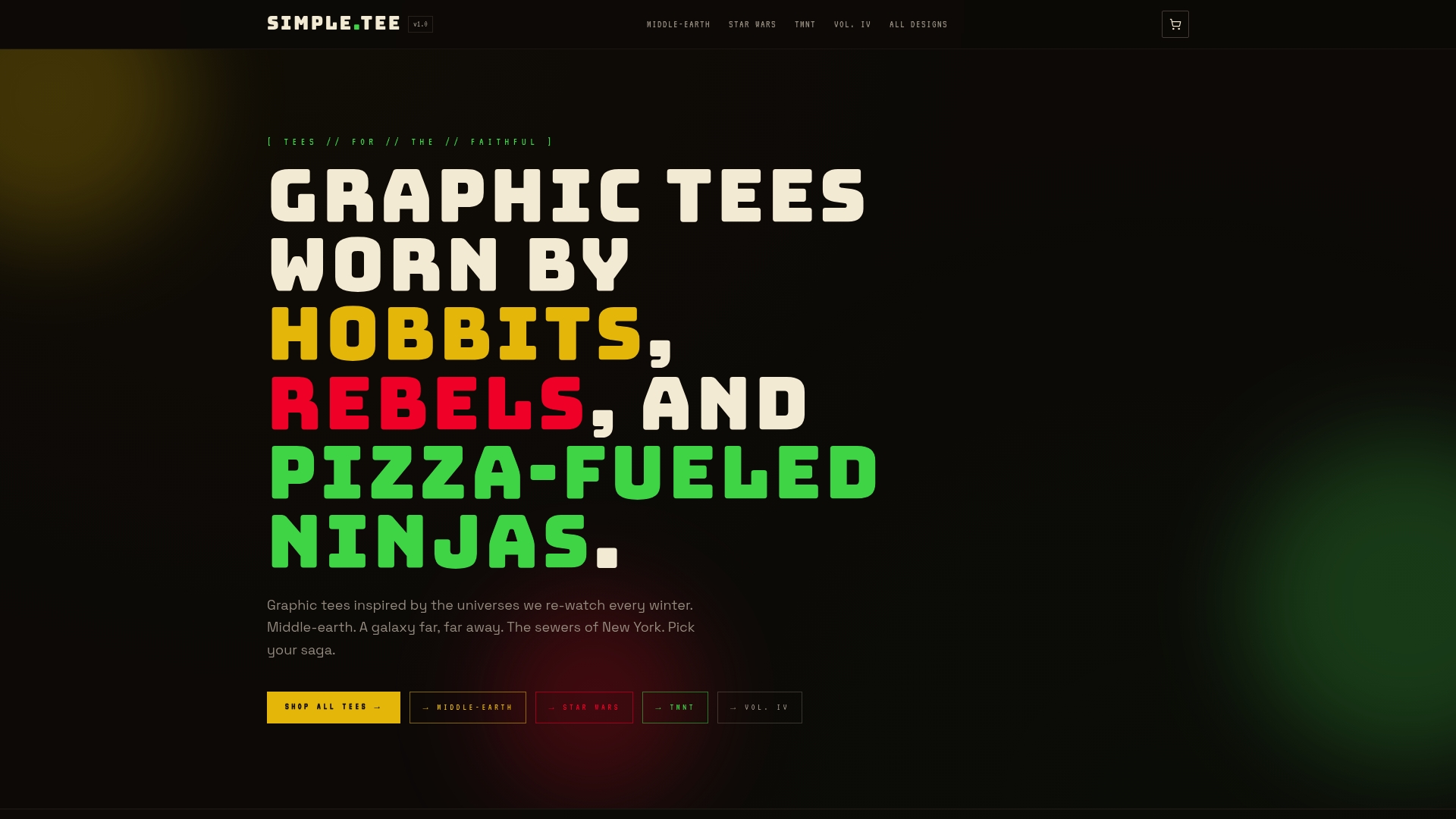
At $24.99, every tee in the collection covers Lord of the Rings, Star Wars, TMNT, and more, with prints that stay sharp wash after wash. If you’re between sizes, size up for a regular fit feel or stay true to size for a closer cut. Check the size chart on any product page before ordering.
Browse the full collection at Simpletee’s graphic tee store or go straight to the Rebel Forever tee for a strong starting point.
Sources and further reading
- Men’s T-Shirt Fit Guide 2026: Slim vs Regular vs Relaxed Fit Explained — Alibaba.com Seller Blog
- Slim Fit T-Shirt Guide 2026: Body Type Matching & Casual Styling — Alibaba.com Seller Blog
- Oversized vs Relaxed vs Regular Fit: T-Shirt Guide (Size Chart) | The Litt
- Understanding Fit Types: Slim, Regular, Relaxed, Oversized | YourSizer
- Slim vs Regular Fit T-Shirts: Which One Looks Better on You? — Different Touch
- Slim Fit vs. Regular Fit Shirts: What’s the Difference? | Mizzen+Main
- Rebel - Tri-blend T-shirt · Simple Tee
Always cross-reference your chest measurement against the brand’s own size chart before ordering. Simpletee’s product pages include size details for each tee.